What the preclinical literature reports for each compound, in which species, at what scale — and the point at which it stops reporting anything.
Last reviewed February 12, 2026 · Maintained by Mara Ellison and Jonah Adeyemi
Standing note. These entries summarise published animal-model and cell-culture research for general education. They are not medical advice, they do not describe use in humans, and they contain no dosing, preparation, or sourcing information. Findings in rats and mice are hypothesis-generating and do not establish safety or effect in people.
A fifteen-amino-acid sequence with a large rodent literature and almost no independent one.
What it is
BPC-157 is a synthetic peptide of fifteen amino acids. Its originating group describes the sequence as a fragment of a larger protein identified in human gastric juice, which is where the name — body protection compound — comes from. It is not a hormone, it has no established receptor, and there is no settled account of how it would act. Proposed mechanisms in the published work include effects on angiogenesis, on nitric oxide signalling, and on growth-factor expression at an injury site; these are proposals arising from rodent experiments rather than a characterised pathway. The peptide is reported to be unusually stable in gastric acid, which is the property that made it interesting to its originators in the first place.
What the animal literature reports
The bulk of the work is surgical injury in rats. The most-cited model is Achilles tendon transection in rats, where the transected tendon is repaired and later tested for biomechanical strength — load at failure, stiffness — alongside histological scoring of the healing tissue. Comparable experiments have been reported in a rat medial collateral ligament transection model and in rat muscle crush and transection models. A second cluster of work sits in the gastrointestinal tract, where the compound was first studied: ethanol-induced and NSAID-induced gastric lesion models in rats, and chemically induced colitis models in rats and mice, scored by lesion area and histology. A smaller body of cell-culture work reports effects on tendon-derived fibroblast outgrowth and migration in dishes. Across these, the reported direction of effect is consistently favourable, and the reported effect sizes are frequently large.
Where the evidence thins
The dominant structural fact about this literature is that most of it descends from one research lineage — a group based in Zagreb, publishing across the 1990s, 2000s, and 2010s, together with collaborators. Independent replication by unaffiliated groups in different institutions is scarce, and where outside groups have worked in this area the endpoints often differ enough that the results do not directly confirm or contradict anything. Group sizes are typically small. Blinding of surgical assessment and histological scoring is inconsistently described, and randomisation procedures frequently go unstated. The endpoints vary widely between papers, which makes the literature look internally consistent while giving it very little capacity to disprove itself. There are no published, peer-reviewed randomised human efficacy results, and no registered human programme has reported outcomes in the literature. On the human question the honest statement is the blunt one: there is essentially no rigorous human evidence for this compound, and the rodent work does not substitute for it.
Evidence snapshot
Model organisms
Rat predominantly; some mouse work; isolated cell-culture experiments
Study scale
Small single-centre groups; sample sizes at the low end of the preclinical norm
Human trial status
No published peer-reviewed randomised efficacy results
A well-characterised endogenous protein — and a circulating fragment that is not the same molecule.
What it is
Thymosin β4 is a naturally occurring peptide of forty-three amino acids and the principal actin-sequestering molecule in most mammalian cells. It binds monomeric G-actin and holds a reserve pool available for polymerisation, which places it upstream of cell motility, cytoskeletal remodelling, and migration. Unlike most compounds in this Library, its basic cell biology is genuinely well established and was worked out independently of any therapeutic interest. One point of vocabulary matters here: the fragment abbreviated TB-500 in non-scientific writing refers to a short synthetic sequence containing the actin-binding motif, not to the intact forty-three-residue peptide. Findings reported for the full molecule do not automatically transfer to the fragment, and much of the published animal work used the full peptide.
What the animal literature reports
Dermal wound healing in mice is the largest body of work: full-thickness excisional wound models scored for closure rate, re-epithelialisation, and vessel density, with reported acceleration of closure. Corneal injury models in rats and mice form a second cluster, reporting reduced inflammatory cell infiltration and faster epithelial repair. A third and heavily cited cluster is cardiac: mouse and rat myocardial infarction models reporting effects on cardiomyocyte survival, epicardial progenitor activation, and vessel formation after ischaemic injury, with functional endpoints measured by echocardiography. There is also murine work on hair follicle cycling and on peripheral nerve injury. Mechanistically these are usually attributed to actin regulation and cell migration rather than to a receptor-mediated signalling cascade.
Where the evidence thins
The cardiac literature is more concentrated than its citation volume suggests, resting on a limited number of groups working with related model systems, and the functional endpoints in small-animal infarct models are notoriously sensitive to surgical technique. Human work exists but has not been kind: sponsor-run trials in ophthalmic and dermal indications were conducted over roughly a decade, results across them were mixed, and no approved product has resulted. That is a more informative outcome than silence, and it should temper the rodent findings rather than be read around them. The fragment-versus-molecule problem also undermines much of what is claimed downstream of this research, since the entity studied in the animal literature is frequently not the entity being discussed elsewhere. Species differences in wound healing add a further limit: loose-skinned rodents heal substantially by contraction rather than by the re-epithelialisation that dominates in humans, so closure-rate endpoints in mice do not translate cleanly.
Evidence snapshot
Model organisms
Mouse and rat; corneal, dermal, and cardiac injury models; cultured cells
Study scale
Moderate for the field; multi-group, though clustered by indication
Human trial status
Sponsor-run trials conducted in dermal and ophthalmic indications; results mixed, no approved product
Replication status
Basic cell biology independently established; injury-model findings less so
Histological scoring — the most common endpoint in this literature and the one most sensitive to whether the person holding the slide knows which animal it came from.
A three-residue peptide with a real cell-culture signal and a persistent delivery problem.
What it is
GHK is glycyl-L-histidyl-L-lysine, a tripeptide isolated from human plasma in the early 1970s during work on why plasma from younger donors behaved differently in culture than plasma from older donors. It binds copper(II) with high affinity, and the copper complex — GHK-Cu — is the form usually studied. Copper is not incidental to the story: it is a required cofactor for lysyl oxidase, an enzyme central to collagen and elastin cross-linking, which means the peptide and the metal are difficult to separate as explanations for anything observed.
What the animal literature reports
The strongest and most reproducible signal is in cell culture. In cultured human dermal fibroblasts, GHK-Cu has been reported to increase collagen production, to raise expression of decorin and other matrix components, and to shift the balance between matrix metalloproteinases and their tissue inhibitors. Gene-expression studies in cultured cells report broad transcriptional changes consistent with a matrix-remodelling program. In vivo, rodent and porcine full-thickness wound models report accelerated closure and increased vascularisation, and rat models of ischaemic wound healing report similar directional effects. There is also cell-culture work on hair follicle cells and on nerve outgrowth, considerably thinner than the dermal work.
Where the evidence thins
A fibroblast in a dish is bathed directly in whatever is added to the medium. Intact skin is a barrier organ specifically evolved to prevent that, and a hydrophilic copper-bound tripeptide is not an obvious candidate to cross it. The distance between the culture result and the tissue result is the central unresolved question in this entry, and much of the writing about GHK-Cu elsewhere simply steps over it. The human literature is dominated by small studies conducted or funded by cosmetic manufacturers, typically short in duration, frequently using subjective or photographic assessment, and rarely replicated by independent groups. Copper salts alone produce some of the same effects in culture, and studies that do not include a copper-only control cannot separate the peptide's contribution from the metal's. Rodent skin also differs structurally from human skin in thickness, follicle density, and healing mechanics, which limits what the wound models establish.
Evidence snapshot
Model organisms
Cultured human dermal fibroblasts primarily; rat and porcine wound models
Study scale
Cell-culture work substantial; in vivo work small and scattered
Human trial status
Small industry-affiliated studies with subjective endpoints; no rigorous independent trials
Replication status
Culture findings repeated across groups; tissue-level findings not established
The anti-inflammatory tail of a larger hormone, studied almost entirely in chemically injured mouse colon.
What it is
KPV is lysine-proline-valine, the three C-terminal residues of α-melanocyte-stimulating hormone. The parent hormone has well-characterised roles in pigmentation and in inflammatory signalling; the interest in the tripeptide is that in model systems it retains a measurable share of the anti-inflammatory activity without the pigmentary effects of the full molecule. Reported mechanisms centre on interference with NF-κB signalling in intestinal epithelial cells, with some work implicating the peptide transporter PepT1 as a route of cellular entry.
What the animal literature reports
Nearly all of the in vivo work is in chemically induced colitis in mice. The two standard models are dextran sulphate sodium in the drinking water, which strips the epithelial barrier, and trinitrobenzene sulphonic acid instilled into the colon, which produces a hapten-driven inflammatory lesion. In both, published work reports attenuated body-mass decline, lower histological injury scores, lower myeloperoxidase activity as a proxy for neutrophil infiltration, and reduced pro-inflammatory cytokine expression in colonic tissue. A distinct and more recent line of work encapsulates the peptide in hydrogels or nanoparticles to concentrate it at inflamed colonic mucosa in mice, reporting improved effect over the free peptide. In cultured human intestinal epithelial cell lines, reduced NF-κB activation and cytokine secretion have been reported after inflammatory stimulation.
Where the evidence thins
Chemically induced colitis is a reproducible chemical injury, not inflammatory bowel disease. It is acute where the human conditions are relapsing and remitting, it is initiated by a known insult where the human conditions have no single trigger, and drugs that resolve it have repeatedly failed to help patients. That mismatch is the single most important limit on this entry and it applies to every finding above. Beyond it: group sizes are small, the work comes from a modest number of laboratories, blinding of histological scoring is often unreported, and the delivery-vehicle studies confound the peptide with the vehicle in ways that are not always separable from the published data. There are no registered human efficacy trials with published results. The correct summary is that KPV is an interesting molecule in a mouse model of chemical colonic injury, and that no more than that has been shown.
Evidence snapshot
Model organisms
Mouse, chemically induced colitis; cultured human intestinal epithelial lines
Study scale
Small; confined to a modest number of laboratories
Human trial status
No registered efficacy trials with published results
Replication status
Direction of effect repeated within the model; not established outside it
The phrase “has been shown to” is doing enormous work across this field. Shown in what, in how many, by whom, and measured how — those four questions dissolve most of it.
Mara Ellison, Editor
The only human cathelicidin, and a molecule whose behaviour changes sharply outside the test tube.
What it is
LL-37 is the thirty-seven-residue C-terminal fragment released by proteolytic cleavage from hCAP18, the sole cathelicidin encoded in the human genome. It is produced by neutrophils and by epithelial cells at barrier surfaces. Structurally it is amphipathic and cationic, which lets it associate with and disrupt negatively charged bacterial membranes; it also has a substantial second identity as an immune signalling molecule, influencing chemotaxis, wound repair, and cytokine responses independent of direct killing. Of everything in this Library, it is the compound with the clearest endogenous physiological role.
What the animal literature reports
In vitro, broad activity against Gram-positive and Gram-negative bacteria has been reported extensively, along with activity against some fungi and enveloped viruses. In vivo, mouse models of localised and systemic bacterial infection report reduced bacterial burden and improved survival with exogenous peptide or with peptide analogues, and murine wound models report accelerated closure and altered inflammatory infiltrate. Mouse sepsis models have been used to study the endotoxin-neutralising properties of the peptide. A separate and important strand comes from genetic work: mice lacking their own cathelicidin, CRAMP, show greater susceptibility to certain skin and gastrointestinal infections, which is evidence about the endogenous system rather than about administered peptide.
Where the evidence thins
The in vitro antimicrobial activity is strongly dependent on conditions. Physiological salt concentrations and the presence of serum proteins substantially reduce measured potency, which means a great many published minimum-inhibitory-concentration values describe a chemical environment that does not exist in tissue. At higher concentrations the same membrane-disrupting property that kills bacteria is cytotoxic to mammalian cells, so the therapeutic window in models is narrow. Mice do not have LL-37; they have CRAMP, an orthologue with different sequence and properties, so mouse experiments are either using a foreign peptide or studying a different molecule. Clinical development in this area has largely proceeded through engineered analogues rather than the native peptide, and has not to date produced an approved product. The literature is large, but its size reflects a large basic-science community rather than a large body of translational evidence.
Evidence snapshot
Model organisms
Mouse infection, sepsis, and wound models; extensive in vitro bacteriology
Study scale
Large basic-science literature; in vivo work smaller and more scattered
Human trial status
Early-phase work on engineered analogues; no approved product
Replication status
Core biology well replicated; condition-dependence limits comparability across labs
Bound volumes are still the fastest way to find out whether a 1990s finding was ever revisited. Frequently the answer is that it was cited, not repeated.
The one compound in this Library with a substantial human clinical literature — and an unresolved argument about its quality.
What it is
Thymosin α-1 is an acetylated peptide of twenty-eight amino acids, derived from the larger precursor prothymosin α and originally isolated from thymic tissue extracts in the search for the thymus's humoral activity. Reported activity centres on T-cell maturation and function, dendritic cell activation, and signalling through Toll-like receptors, with downstream effects on the balance of cytokine responses. It sits apart from the rest of this Library in one respect worth stating plainly: it has been through regulatory review, and is approved in a number of countries as thymalfasin for chronic hepatitis B and as a vaccine adjuvant in specific populations. We record that as a regulatory fact. It is not an endorsement, and nothing in this entry describes use.
What the animal literature reports
Rodent work includes models of chemically or radiation-induced immunosuppression, in which restored lymphocyte counts and function have been reported, and murine vaccine-adjuvant experiments reporting enhanced antibody responses to co-administered antigen. Mouse infection and sepsis models report altered survival and altered inflammatory cytokine profiles. In cell culture, effects on T-cell differentiation markers, on natural killer cell activity, and on dendritic cell maturation have been described across multiple laboratories. Mouse tumour models have also been used to study immune-mediated effects, generally as adjunct rather than as primary intervention.
Where the evidence thins
The human literature is genuinely large and genuinely contested. Trials span decades, indications, and countries; many are small, open-label, or use surrogate immunological endpoints rather than clinical outcomes, and systematic reviewers have repeatedly noted heterogeneity severe enough to limit pooling. Results in critical-illness and sepsis populations have been mixed, with some large trials failing to show benefit on primary endpoints. Approval in some jurisdictions and not others is itself informative about how regulators have read the same evidence base. The preclinical work has the usual problems — modest group sizes, variable blinding — but here they matter less, because the human data exist and should be weighted above the rodent data rather than assembled alongside it. This is the entry where readers should be most careful not to import conclusions from mice.
Evidence snapshot
Model organisms
Mouse and rat immunosuppression, infection, and adjuvant models; cultured immune cells
Study scale
Preclinical work moderate; human literature extensive but heterogeneous
Human trial status
Substantial trial literature; approved in some jurisdictions, contested quality, mixed results in critical illness
Replication status
Cell-culture immunology replicated across groups; clinical findings inconsistent
A young field, roughly a decade old, with a small number of laboratories doing most of the work.
What it is
MOTS-c is a peptide of sixteen amino acids encoded within an open reading frame in the mitochondrial 12S ribosomal RNA gene — that is, in mitochondrial rather than nuclear DNA. It was described in the mid-2010s as part of a broader effort to identify short peptides hidden in the mitochondrial genome. Reported mechanisms centre on the folate–methionine cycle, on activation of AMP-activated protein kinase, and on nuclear translocation under metabolic stress, positioning it as a signal from mitochondria to the rest of the cell rather than as a conventional hormone.
What the animal literature reports
The core in vivo work is in mice fed high-fat diets, where published studies report reduced adiposity and improved measures of insulin sensitivity relative to controls. Related mouse work reports effects on skeletal muscle metabolism and on exercise capacity in aged animals, and studies in cultured myotubes and hepatocytes report changes in glucose uptake and in AMPK-dependent signalling consistent with the in vivo findings. There is also a strand of work reporting that endogenous circulating levels change with exercise and with age in both rodents and humans, which is observational and does not establish a causal role.
Where the evidence thins
This is a small field and should be described as one. A large share of the in vivo work traces to a limited number of laboratories, often with shared reagents and methods, and independent replication of the metabolic phenotypes is still limited. The detection and quantification of the endogenous peptide has been the subject of methodological argument — antibody specificity and mass-spectrometric confirmation are non-trivial for very short peptides — which matters because several conclusions rest on measured circulating concentrations. Human data are observational: associations between circulating levels and metabolic status or fitness, not interventional results. There are no published randomised human efficacy outcomes. A field this young with findings this consistent warrants more caution rather than less, because the corrective work has not had time to happen yet.
Evidence snapshot
Model organisms
Mouse metabolic models; cultured myotubes and hepatocytes
Study scale
Small; a young literature concentrated in few laboratories
Human trial status
Observational association studies only; no published randomised efficacy results
Replication status
Limited independent replication; measurement methodology still contested
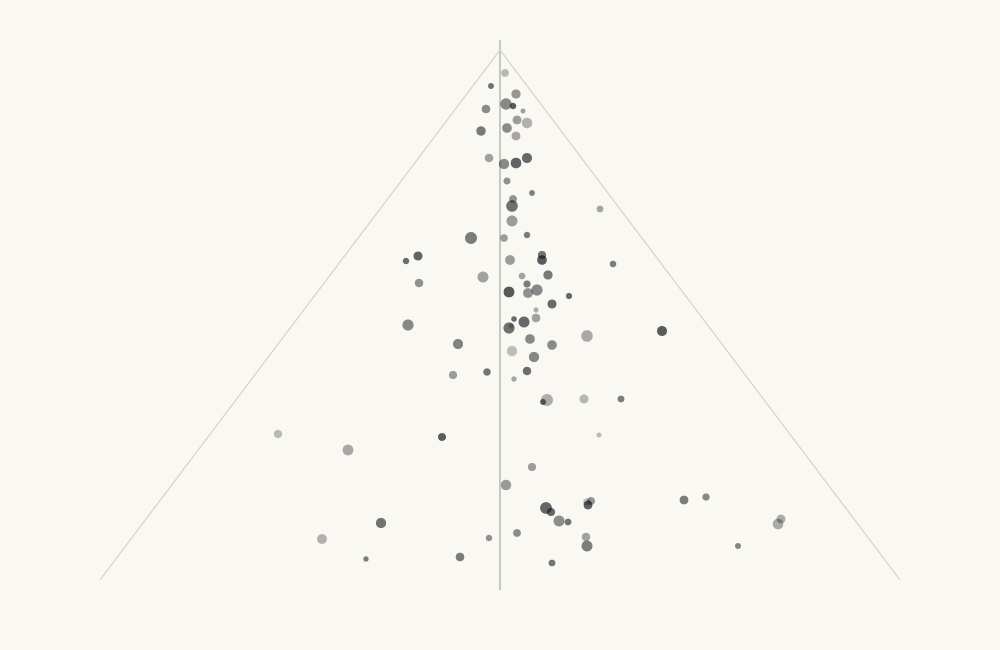
Asymmetry at the base of a funnel plot is the conventional signal that small negative studies are missing from a literature. Most peptide literatures are too sparse to plot at all.
Most of the in vivo work uses a laboratory analogue rather than the peptide itself, and that distinction is routinely lost.
What it is
Humanin is a peptide of twenty-four amino acids encoded within the mitochondrial 16S ribosomal RNA gene. It was identified in the early 2000s in a screen of complementary DNA from brain tissue of a person who had died with Alzheimer's disease, selected because it protected cultured cells against a form of neuronal death. Candidate receptors have been proposed, including a trimeric receptor complex associated with cytokine signalling, but the mechanistic account remains incomplete. A structural variant in which a single glycine substitution greatly increases potency in model systems is used in a large share of the published in vivo experiments.
What the animal literature reports
In cultured neurons, protection against toxicity from amyloid-β species and from other insults has been reported across several laboratories. In vivo, rodent models of memory impairment — including chemically induced and transgenic models — report preserved performance on maze and avoidance tasks relative to controls. Rodent models of cerebral ischaemia report reduced infarct volume in some published work. A separate metabolic strand reports effects on insulin sensitivity and on glucose handling in rodents, and observational work reports that circulating levels decline with age in humans and other species.
Where the evidence thins
The most consequential caveat is the one stated above: a large fraction of the in vivo literature uses the more potent analogue rather than native humanin, so results are frequently attributed to a molecule that was not the one administered. Behavioural endpoints in rodent memory models are among the least robust in neuroscience, sensitive to handling, housing, time of day, and to whether the observer is blinded — and the reporting of blinding in this literature is inconsistent. Early work was concentrated in a small number of groups. The human evidence is entirely observational; no interventional human trial has reported efficacy outcomes. Neuroprotection in rodents has an unusually poor translational record across all of neuroscience, not merely here, and that base rate should be applied to every finding in this entry.
Evidence snapshot
Model organisms
Mouse and rat cognitive and ischaemia models; cultured neurons
Study scale
Small; behavioural endpoints with high variability
Human trial status
Observational association data only; no interventional efficacy results
Replication status
Culture findings repeated; in vivo work largely uses an analogue, limiting comparability
Every entry above follows the same shape, and the shape is the argument. “What it is” describes chemistry and origin, because a surprising amount of confusion about these compounds is confusion about which molecule is being discussed. “What the animal literature reports” names the species and the model each time it makes a claim — not because we enjoy the repetition, but because dropping those words is how a rat experiment becomes a sentence about people. “Where the evidence thins” comes last and is deliberately the longest section in most entries.
The hedged verbs are load-bearing. When we write that something has been reported or observed, we mean that it appears in the published record and that we have not found independent confirmation of it. When we write that a finding has been replicated, we mean a different group in a different institution ran a comparable experiment and published the outcome. Those are different claims and we do not let them share a verb.
The evidence snapshots use descriptive words rather than figures. That is a deliberate constraint: numbers stripped of their context get quoted without it, and a table of numbers on a page about compounds is read by some people as instructions. It is not, and nothing here is.
Where a compound has essentially no rigorous human evidence, the entry says so in a plain sentence rather than gesturing at “emerging research.” Absence of evidence is a finding. It is usually the most important finding on the page, and it is the one most often written around elsewhere. If an entry seems to end abruptly — if it stops without telling you what any of it means for a person — that is not an oversight. That is the literature stopping, and we stop where it does.